
Dungeon Rush
LAVA LABS OYUN YAZILIM VE PAZARLAMA ANONİM ŞİRKETİStrategy
4.4133.00 Reviews
- Version
- 54
- Installs
- 100.00K
- Age Rating
- Everyone
Screenshots
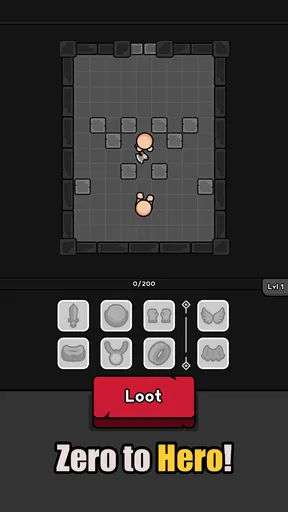
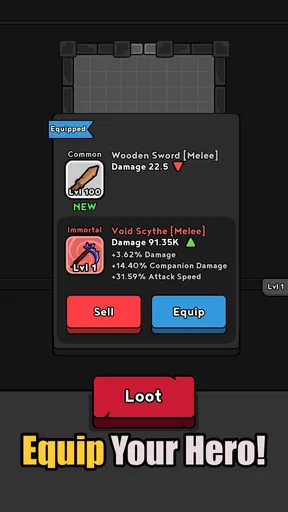
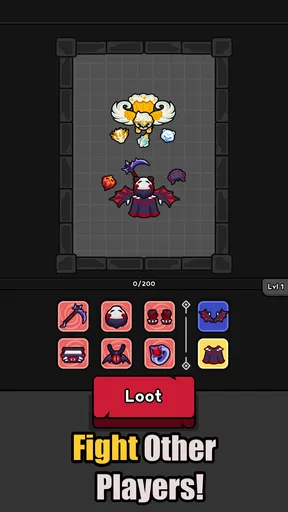
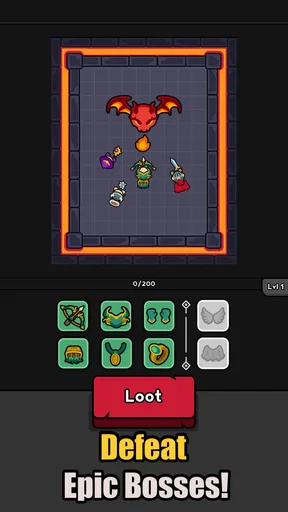
Our Review of Dungeon Rush
 Analysis by Appyee
I went into Dungeon Rush expecting a quick strategy game built around short dungeon sessions, and that is exactly where it makes the strongest impression. Its central loop is easy to understand: defeat enemies, collect loot, improve equipment, and send your character back into another run. The appeal is less about a long story or complicated controls and more about making small decisions that gradually turn a fragile fighter into a more capable one.
That simplicity makes it a comfortable game for spare moments. I can imagine opening it during a commute, between tasks, or while waiting for dinner, making a few equipment choices, and leaving it to continue its rhythm. At the same time, the idle structure means it is not designed for players who want constant tactical control. If you prefer carefully directed battles, elaborate maps, or a campaign with a strong narrative, this may feel too lightweight.
How Dungeon Rush feels in its current version
The game sits in the strategy category, although its strategy is presented through progression choices rather than a traditional board, real-time battlefield, or large-scale management system. The important question is usually not whether I can perform a perfect attack at the right second. It is whether I am improving the right part of my build for the next challenge and making sensible use of the rewards collected along the way.
That distinction matters because the store summary, “Slay, Loot, Equip, Idle, Repeat!”, describes the rhythm without explaining the player’s role inside it. I am not simply watching numbers rise. I still need to pay attention to the quality of equipment and decide when a new item is actually useful instead of automatically treating every drop as an upgrade. The most satisfying moments come from turning a messy collection of rewards into a focused setup.
The game is free to download, which makes it easy to try without committing money at the start. It includes purchases ranging from $0.99 to $299.99 per item, so I would approach the shop carefully. A free entry point is welcome, but the presence of a wide purchase range is a reminder to decide in advance whether I want to play entirely through normal progression or spend to speed things up.
Its audience rating is Everyone, and the basic presentation is approachable enough for a broad audience. That does not mean every player will enjoy it equally. The game’s real dividing line is patience: people who like gradual improvement and repeated runs will understand its appeal quickly, while players looking for a demanding, hands-on strategy challenge may run out of interest sooner.
The loop is simple, but the choices still matter
My first useful habit with this kind of game is to avoid treating the equipment screen like a storage bin. When several items arrive close together, I compare what they improve and ask whether the change helps the next obstacle or merely raises a single visible value. A slightly less impressive item can be more useful if it supports a balanced build instead of pushing one strength while leaving the rest weak.
This is one of the game’s less obvious trade-offs. Idle progression encourages quick decisions because rewards keep arriving, but rushing through every item can create a poorly focused character. I get better results when I pause after a successful run, review the equipment that actually contributed to it, and then make one or two deliberate changes. That workflow keeps the game from becoming a purely automatic reward collection exercise.
The other important choice is when to stop actively managing the session. Dungeon Rush works best when I use the interactive moments for planning and let the idle side handle the repetitive part. Checking every tiny change can make the experience feel like work, while ignoring the game for too long can mean missing a useful upgrade. A short review after a batch of rewards is a better middle ground than either extreme.
Why the idle design works for everyday play
A realistic use case is a busy weekday when I have only a few minutes at a time. I can start a run before answering messages, return later to inspect the loot, equip the strongest combination, and begin again without needing to remember a complicated control scheme. That makes it more convenient than many traditional strategy games, which often punish interruptions or require a full uninterrupted match.
The same convenience is also the game’s main limitation. Because the action can continue without constant input, I do not get the same sense of personal control that I would get from a turn-based tactics game. In those alternatives, positioning and timing are the core experience. Here, the satisfaction comes from progression management. I would choose Dungeon Rush for a relaxed routine, not for a tense evening of solving combat puzzles.
Another useful approach is to give each play session a small purpose. Instead of opening the game only to collect everything available, I might decide to improve survivability, test a different equipment combination, or prepare for the next difficult section. This creates a clearer reason to return and helps prevent the repeated loop from becoming background noise.
What the current release tells me about its direction
The current version is 54, which suggests that the game is already beyond an initial launch build and has had room to develop. I would read that as a sign of an established progression framework rather than proof of any particular future feature. The important point for a new player is that the game is not being presented as an untouched first experiment; it has reached a mature version number while keeping its core identity focused on dungeon advancement and equipment.
The release date is listed as April 29, 2026. Since that date is part of the product’s current presentation, I would treat the present version as the relevant starting point rather than judging it by an early prototype. Still, a version number alone does not tell me whether future updates will add more depth, new content, or only maintenance changes. I would keep expectations grounded in what is playable now: a compact idle strategy loop.
For existing users, the practical effect of a later version is that the best way to evaluate an update is not simply to look for a new label. I would check whether the game feels smoother in the parts I use most: collecting rewards, comparing equipment, and returning to the next run. If those actions remain clear and quick, the current build is doing its job. If the interface becomes busier or progression feels harder to read, the higher version number would not automatically make the experience better.
New players should also understand that a developed version does not remove the need for a sensible starting plan. I would spend the opening period learning how quickly equipment changes the character, how often I need to review rewards, and whether the idle pace matches my preferred play style. That early test is more useful than immediately buying anything, because it tells me whether the core loop itself is enjoyable.
Where Dungeon Rush is strongest compared with alternatives
Compared with a conventional strategy game, Dungeon Rush asks for less time and less concentration per session. I do not need to reserve a long block for a complete match, and interruptions are less disruptive. Compared with a pure idle game, however, it gives me a more recognizable sense of involvement through loot and equipment decisions. I am not only watching a counter; I am shaping the direction of progression, even if the battles are not fully controlled.
That middle position is its clearest strength. Players who find standard strategy games too demanding but find totally passive idle games boring may enjoy the balance. I can make meaningful choices without being buried under a large number of systems. The trade-off is that dedicated strategy fans may find the decision space narrow, especially if they want maps, formations, diplomacy, resource chains, or carefully scripted encounters.
I would also place it below a story-led dungeon adventure for anyone who needs characters, plot, and exploration to carry the experience. The game’s attraction is the repeatable improvement loop, not a promise of a rich narrative journey. Choosing it over a story-focused alternative makes sense only if the pleasure of optimizing a run matters more to me than discovering what happens next.
Small habits that make progression easier to read
One of my most useful habits is to compare equipment in context rather than in isolation. Before replacing an item, I consider what the current setup already does well. If the character is progressing comfortably, I do not need to rebuild everything for a minor gain. If progress stalls, I look for the weakest part of the setup instead of automatically equipping the newest drop.
I also recommend separating experimentation from routine progression. When I want to test a new combination, I change one meaningful part at a time. Otherwise, it becomes difficult to tell which decision helped and which one created a setback. This is especially valuable in an idle game, where the results may appear after a delay rather than immediately on screen.
A third habit is to set a spending boundary before opening the shop. The game can be played for free, but the available purchase range makes impulse decisions worth avoiding. I would first establish whether the normal loop is enjoyable, then decide whether a purchase solves a genuine annoyance or merely shortens a satisfying part of progression. For me, that distinction keeps convenience spending from replacing the game’s main reward.
Who should try it, and who should skip it
I would recommend Dungeon Rush to someone who enjoys equipment upgrades, repeated dungeon attempts, and games that fit around a busy schedule. It is particularly suitable for players who like checking progress several times a day without needing to commit to a long session. The Everyone rating also makes it an approachable choice for people who want a simple strategy game rather than an intense competitive experience.
I would be more cautious about recommending it to a player who needs constant agency. If your favorite part of strategy games is directing every move, finding the perfect position, or reacting to an opponent in real time, the idle structure may feel passive. I would also skip it if I dislike repeating similar loops or if I want a large campaign with a strong sense of place.
The game is available on devices running Android 7.0 or later. That broad system requirement makes it accessible to many Android users, although I would still judge the experience by how well the game fits my particular device and routine rather than assuming compatibility guarantees a perfect experience. The developer is LAVA LABS OYUN YAZILIM VE PAZARLAMA ANONİM ŞİRKETİ.
Its reception gives potential players some useful context: it holds a 4.4 average from around 3.1 thousand ratings, with over 100 thousand installs. I see that as encouraging evidence that the core loop connects with a meaningful audience, but not as a reason to ignore the personal fit question. Idle games can divide players sharply; a well-liked progression system can still feel repetitive if it does not match the way I prefer to play.
What still feels limited
The biggest concern is repetition. “Slay, loot, equip, repeat” is an honest description of the structure, but repetition needs enough variation to remain interesting. If I am already satisfied by the equipment decisions, the loop can stay pleasant. If those decisions begin to feel automatic, the game loses much of its strategic identity and starts to resemble a reward timer.
The free-to-play structure is another point I would watch closely. A free download lowers the barrier to entry, but purchases can change how I perceive progress. Even when I choose not to spend, seeing expensive options can make me question whether the intended pace is the natural one. My advice is to treat the shop as optional convenience and judge the game by the free experience before making any commitment.
There is also a difference between accessible strategy and shallow strategy. Dungeon Rush benefits from being easy to understand, but players who want a wide range of long-term approaches may eventually want more complexity than the current format provides. That is not a flaw for its target audience, yet it is a real reason to choose a deeper alternative if experimentation is the main thing I seek.
What I would watch as the game evolves
For future development, I would pay attention to whether new updates deepen the equipment decisions without making the interface confusing. More options are useful only when I can understand why one choice is better in a particular situation. The best evolution would preserve the quick session structure while giving experienced players more reasons to think about their builds.
I would also watch how the balance between active decisions and idle progress develops. The current appeal comes from combining both. If the idle side becomes too dominant, my choices may feel cosmetic. If active management becomes too demanding, the game could lose the convenience that makes it suitable for short sessions. Keeping those two sides in proportion is more important than simply adding more rewards.
Existing users should judge changes through their daily routine. Does a return visit still take only a manageable amount of attention? Can equipment be compared quickly? Does a new challenge encourage a different plan rather than just requiring more time? Those questions reveal more about the health of the game than a new version number by itself.
New users can make the same evaluation after a short trial: enjoy the loop first, learn how equipment choices affect progress, and postpone purchases until the normal rhythm feels worthwhile. That approach also answers the most practical question about the game—whether it is worth keeping installed—without relying on expectations about future content.
My final view is positive but measured. Dungeon Rush is a convenient strategy game for players who want dungeon progression in small pieces, with enough equipment management to avoid feeling completely passive. I like its clear purpose and the way it turns brief check-ins into gradual improvement. I would not present it as a replacement for a deep tactics game or a story-heavy adventure, because its design is deliberately narrower.
If you enjoy optimizing a character, collecting better gear, and returning to a familiar loop throughout the day, I think it is worth trying at its free entry point. Just keep the purchase system in perspective and be honest about your tolerance for repetition. The best reason to play is the small decision-making rhythm, not the promise of endless novelty. For the right player, that focused approach is exactly what makes the game easy to return to.
Verdict
Strengths of Dungeon Rush
- Fast-paced battles are well suited to short gaming sessions.
- Large hero roster encourages experimentation with different team setups.
- Auto-battle helps progress when you have limited time to play.
- Frequent rewards make early progression feel satisfying.
- Simple controls are easy for newcomers to understand.
Limitations of Dungeon Rush
- Progress can slow noticeably without spending premium currency.
- Repeated stages may make the mid-game feel somewhat repetitive.
- Many menus and upgrade systems can feel overwhelming at first.
- Online features require a stable connection to access your progress.
- Random hero rewards may frustrate players seeking specific characters.
Other Releases by LAVA LABS OYUN YAZILIM VE PAZARLAMA ANONİM ŞİRKETİ
View All
Auto Drill: Galaxy
Strategy4.3
Similar Picks in This Category
View All
Clash of Clans
Supercell4.5

Plants vs. Zombies™
ELECTRONIC ARTS3.7

Lords Mobile: Kingdom Wars
IGG.COM4.5

Clash Royale
Supercell4.4

State.io — Conquer the World
CASUAL AZUR GAMES4.1

Car Driving School : Car Games
Spark Game Studios3.9
Frequently Asked Questions
What is Dungeon Rush, and how does the gameplay work?
Dungeon Rush is a fantasy role-playing game focused on assembling a team of heroes and sending them into dangerous dungeons. Players battle monsters, collect equipment, upgrade characters, and unlock new abilities as they progress. Much of the experience revolves around strategic team building, choosing suitable heroes, improving their skills, and preparing for increasingly difficult encounters.
Is Dungeon Rush free to download and play?
Dungeon Rush can generally be downloaded and played for free, allowing users to experience the main campaign and progression systems without an upfront purchase. However, the game may include optional in-app purchases for premium currency, resources, summons, equipment, or progression bundles. Players who prefer not to spend money should review the purchase settings and remember that progress may require patience.
Does Dungeon Rush require an internet connection?
An internet connection is usually needed for important features in Dungeon Rush, including account synchronization, online events, rewards, advertisements, updates, and purchases. Some parts of the game may appear accessible without a connection, but offline play can be limited or unreliable. A stable connection is recommended, particularly when claiming rewards or participating in competitive and event-based content.
Is Dungeon Rush suitable for beginners and casual players?
Dungeon Rush is relatively approachable for beginners because its early stages introduce the main systems gradually, including combat, hero upgrades, equipment, and team formation. Casual players can make progress through regular play, although later content may require more careful planning and resource management. New players should avoid spending upgrade materials too quickly and focus on developing a balanced team.
Are there ads, in-app purchases, or competitive features in Dungeon Rush?
Dungeon Rush may contain advertisements and optional in-app purchases, depending on the version and platform available in your region. Ads can sometimes provide extra rewards, while purchases may offer faster progression or premium resources. The game can also include competitive or ranking-based activities, so players who enjoy collecting heroes and comparing progress with others may find additional long-term motivation.
Play our best games!


